AI Tools Create Not Just Efficiency, But New Dependencies

—What We Lose When "Assistance" Becomes an "External Brain," and How to Regain It
By Adrian Keller | Updated on May, 2026 | 🕓 12 minutes
Key Highlights
- What are the hidden costs of AI efficiency gains?
- How does reliance on AI affect cognitive skills?
- What are workflow dependencies caused by AI tools?
- How does decision dependency form and escalate with AI?
- What practical strategies can reduce AI dependency and maintain human judgment?
1. A Neglected Truth: The Hidden Costs Behind Efficiency Gains
On June 10, 2025, OpenAI’s ChatGPT experienced a global outage lasting more than 15 hours. This was not an ordinary technical glitch—it exposed a fragile reality in formation: when AI tools shift from being "optional" to becoming "infrastructure," every interruption tests an organization’s resilience.
I use AI tools every day. Over the past two years, I have noticed a phenomenon largely ignored by mainstream narratives: while AI eliminates old frictions, it simultaneously creates three new types of dependencies—cognitive dependency, process dependency, and decision dependency. Unlike technical debt, these dependencies are not visible, yet they can cause consequences more severe than mere efficiency loss at critical moments.
A study published by the American Psychological Association (APA) in April 2026 provides alarming data: among 1,923 participants from the U.S. and Canada, 58% admitted that AI "does most of the thinking work" for them. Participants who passively accepted AI suggestions reported significantly lower confidence in their independent reasoning abilities. Interestingly, those who actively questioned, modified, or rejected AI suggestions exhibited stronger confidence and a sense of authorship.
This points to a core issue: the problem is not in using AI, but in how we use it.
2. First-Level Dependency: Cognitive Dependency—When "Assistance" Becomes an "External Brain"
2.1 From "Accelerated Thinking" to "Unable to Start Thinking"
In August 2025, a paper published on arXiv titled “Brainrot: Deskilling and Addiction are Overlooked AI Risks” attracted attention in academia. The authors pointed out that the generative AI industry focuses excessively on discrimination, harmful content, malicious use, and information accuracy, while systematically neglecting cognitive degradation and addiction.
This neglect has reasons. Cognitive decline is neither as easily measurable as AI hallucinations nor as likely to trigger regulatory action as security vulnerabilities. Yet it is happening subtly.
A 2025 study by MIT Media Lab provides direct neuroscientific evidence. Researchers asked 54 participants aged 18–39 to write under three conditions: with ChatGPT assistance, with Google search assistance, and without any external tools. EEG scans revealed that the ChatGPT-assisted group showed lower prefrontal executive control activity, weaker memory retention, and a lower sense of ownership over their writing. More concerningly, over the four-month study, participants increasingly copied AI-generated responses directly, rather than using them as a starting point for their own thinking.
This reminds me of an older analogy: the impact of GPS on spatial memory. Researchers at the University of Montreal conducted a three-year longitudinal study and found that habitual GPS users performed worse in spatial memory tests, and the decline was dose-dependent—the more GPS was used, the more spatial memory deteriorated. Importantly, this decline was caused by GPS usage itself, not because users inherently had poor navigation skills.
In the Inuit hunting communities of the Canadian Arctic, this phenomenon has more severe consequences. Younger hunters replaced generational navigation skills with GPS, and in extreme weather conditions, when GPS failed, serious accidents increased. An elder hunter described it vividly: "They are walking blindfolded."
AI tools are replaying this story in fields such as software engineering, law, medicine, and writing.
2.2 Three Subtle Manifestations of Cognitive Dependency
Manifestation 1: Rigid thinking patterns. Long-term reliance on a particular AI tool’s reasoning style gradually diminishes your ability to approach problems from other angles. A data scientist in London told me: "After using Claude to write Python code for eight months, when facing new problems, my first thought is always 'What would Claude do?' instead of 'How should I think about this?'"
Manifestation 2: Shrinking prior knowledge. Researchers at Lund University in Sweden found that employees with limited prior knowledge on a topic are more likely to blindly trust AI outputs under time pressure. This is not because AI is particularly reliable, but because humans instinctively seek external authority when cognitively uncertain, and AI’s confident tone provides a false sense of certainty.
Manifestation 3: "AI Brain Fry." A March 2026 study in the Harvard Business Review surveyed about 1,500 workers and found that roughly one-seventh reported mental fatigue from managing multiple AI tools simultaneously. Julie Bedard from Boston Consulting Group explained: "AI can run much faster than us, but our brains are still yesterday’s brains." This fatigue does not arise from workload itself but from cognitive taxation caused by switching between multiple AI systems.
2.3 Practical: Building a Personal "Cognitive Firewall"
Based on the above research and my observations, here are three immediately actionable strategies:
Strategy 1: 5-Minute Independent Start Rule
Before opening any AI tool, force yourself to independently brainstorm for at least five minutes using a plain text editor (or even pen and paper). The goal is not to produce a complete solution but to activate your native thinking pathways. APA research found that participants who formed their own opinions before receiving AI suggestions were less likely to over-rely on AI.
Strategy 2: Reverse Verification Checklist
For every significant AI output, deliberately identify three potential errors. You don’t need to actually find mistakes; the process itself trains your critical thinking. A lawyer in Sydney who adopted this habit told me: "I started noticing that AI tends to blur the applicability of legal provisions—that’s where it most often errs."
Strategy 3: Periodic "AI Fasts"
Set aside a half-day each week (I recommend Friday afternoons) to completely avoid all AI tools. Use this time to handle "low-priority but brain-engaging" tasks—writing a long email, organizing notes, or drawing a mind map. The goal is not efficiency, but maintaining cognitive muscle memory.
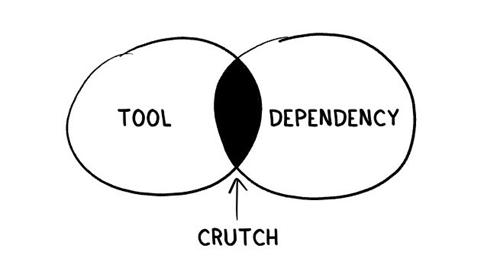
3. Second-Level Dependency: Process Dependency—When Tools Become Single Points of Failure
3.1 When ChatGPT Goes Down, Workflows Collapse
On November 18, 2025, Cloudflare experienced a global outage lasting about six hours, disrupting tens of thousands of websites and services, including ChatGPT and OpenAI’s Sora. Billions of global users were affected.
This was not an isolated event. In March 2026, Anthropic’s Claude went down twice within 24 hours, with Downdetector recording 1,700–4,700 error reports. In November 2025, ChatGPT’s API service was interrupted for about five hours, paralyzing batch processing tasks and file uploads for thousands of companies.
These outages reveal an underestimated risk: when AI tools are deeply embedded into workflows, tool availability becomes synonymous with business continuity.
A CTO at a San Francisco startup described a typical scenario: his team used AI for code review, document generation, drafting client emails, and data analysis. When the ChatGPT API went down, the team lost not only these functions but also the memory of how to complete these tasks manually. "It took us four hours to remember how to write a technical document the traditional way," he said, "and scarier, we realized no one had written an un-AI-edited document in the past six months."
3.2 Four Forms of Process Dependency
Form 1: Tool-stack fragility. Stanford and MIT researchers found that when workers need to use 8–12 AI tools simultaneously, frequent context switching imposes significant cognitive taxes that can outweigh efficiency gains. A marketing manager in Amsterdam described: "I switch between seven AI tools every morning; by noon, I’m exhausted."
Form 2: Vendor lock-in. Prompt libraries, fine-tuned models, and conversation histories are entrenched in a single platform, creating high migration costs. More subtly, data lock-in occurs—when you adapt data formats to fit the AI tool rather than the tool adapting to business needs.
Form 3: Tacit knowledge loss. Teams stop documenting "why we do things this way," because "AI knows." A Toronto engineering manager discovered that after senior engineers left, the team could not explain certain code decisions—decisions were AI-generated, and engineers never fully understood them.
Form 4: Cascade failures. Errors in one AI tool’s output are amplified downstream by automation. In 2025, a media company using AI-generated content + AI review + AI publishing experienced a situation where a single factual error from the upstream AI spread across 12 platforms in 24 hours, causing brand damage before human detection.
3.3 Practical: Building a "Resilient AI Workflow"
Strategy 1: Retain Manual Fallbacks for Critical Steps
For any key business process, ask: If the primary AI tool vanished tomorrow, could we recover manual operations within 24 hours? If the answer is no, you have a process dependency vulnerability. I recommend creating an "end-of-world manual" for each critical step—not for AI, but for humans.
Strategy 2: Interface Abstraction
Manage multiple models through a unified API layer to avoid vendor lock-in. Tools like OpenRouter and LiteLLM help seamlessly switch between models while maintaining consistency in prompts and workflows. This is not just a technical measure but also a risk management strategy.
Strategy 3: Enforce "Human-AI Division of Labor" Documentation
For every important deliverable, clearly mark "AI did this" and "human did that." The goal is not auditing but maintaining team understanding of workflows. A product manager in Tokyo noted: "Writing down human contributions made us realize that many 'AI-assisted' decisions actually required deep human judgment—which we were forgetting."
Strategy 4: Quarterly "AI-Off Drill"
Once a quarter, simulate the unavailability of major AI tools. Not merely "don’t use AI," but complete an entire day of core work using traditional methods. Record where bottlenecks occurred, who struggled, and for how long. These records are more realistic than any risk assessment report.
4. Third-Level Dependency: Decision Dependency—When "Reference" Becomes "Default"
4.1 From Mata v. Avianca to Systemic Crises
In June 2023, a case in the U.S. District Court for the Southern District of New York became emblematic of AI dependency risks. Lawyers Steven A. Schwartz and Peter LoDuca, representing Roberto Mata against Avianca Airlines, used ChatGPT to draft legal briefs, citing six completely nonexistent precedents. When opposing counsel and the court could not locate these cases, Schwartz insisted on their validity—he even had ChatGPT generate a "confirmation" document. [Mata v. Avianca, Inc., No. 22-cv-1461 (S.D.N.Y. June 2023).]
Ultimately, Judge Kevin Castel fined both lawyers and their firm $5,000 and required them to write a letter of apology to the misattributed judges. Schwartz remarked: "I mistakenly assumed ChatGPT could not fabricate cases on its own."
This was only the beginning. By March 2026, over 1,031 AI-hallucination-related legal cases had been recorded worldwide, with 30–50 new cases each month. In March 2026, the U.S. Sixth Circuit Court of Appeals imposed over $100,000 in sanctions on two lawyers—the highest AI hallucination penalty to date—for citing more than 20 fictitious cases in appellate briefs and repeatedly misrepresenting records.
The common thread in these cases is not a lack of professional competence, but the gradual formation of decision dependency: from initially "AI helps me find cases," to "I skim AI-found cases," to "AI cannot be wrong," and finally, "Even if someone questions it, I trust AI."
4.2 Three Stages of Decision Dependency Evolution
Stage 1: Assistance
AI provides options, humans make decisions. This is the healthiest state, but also the least stable—efficiency pressure constantly pushes users toward the next stage.
Stage 2: Delegation
Humans default to accepting AI recommendations, performing only formal checks. APA research shows that 58% of participants are already in this stage—they believe AI "does most of the thinking."
Stage 3: Lock-in
Performance benchmarks are redefined by AI-enhanced output; without AI, original-level work cannot be achieved. A financial analyst in Mexico City described her predicament: "After using AI for financial models, my boss became used to overnight turnaround. Now, doing the same work without AI takes me three days, and the boss thinks I’m slacking."
Conclusion: Balancing Tools and Human Nature
Writing this, I recall a detail from the APA study. Author Sarah Baldeo said something I believe is the most important insight of the entire article:
"The best way to use AI is to train it, not to let it train you."
This reveals a counterintuitive truth: AI dependency is not a technical issue, but a self-cognition issue. When we say "I cannot live without AI," what we really mean is, "I have forgotten where my own capability boundaries lie."
True efficiency is not about doing things faster, but knowing how to act when tools fail. It is not about rejecting AI, but about using AI consciously—knowing when to let the tool step back and the human step forward.
If you have read this far, I invite you to do one thing: close this page, open a blank document, and without any AI assistance, write three points you disagree with in this article. Not to refute me, but to verify that your native thinking ability is still intact.
It is. It just needs to be reawakened.
FAQs
Q1: Is using AI inherently harmful to cognition?
A1: No. The risk arises from over-reliance or passive acceptance. Conscious and active use of AI preserves human thinking.
Q2: Can AI completely replace human workflows?
A2: Not safely. Dependence creates vulnerabilities, as even short AI outages can disrupt work. Human fallback procedures are essential.
Q3: How do we know if our decision-making is becoming AI-dependent?
A3: Indicators include default acceptance of AI suggestions, reduced confidence in independent reasoning, and inability to perform tasks without AI support.
Q4: Are these risks limited to specific industries?
A4: No. They appear across software development, legal work, medicine, writing, and any field heavily integrating AI into daily workflows.
Q5: What immediate steps can mitigate AI dependency?
A5: Strategies include independent thinking periods before AI input, reverse-checking AI outputs, periodic AI "fasting," fallback workflows, and documenting human-AI task division.
References
1. [Preprint, arXiv]. (2025). Brainrot: Deskilling and addiction are overlooked AI risks. https://arxiv.org
2. MIT Media Laboratory. (2025). The neurocognitive impact of generative AI assistance on writing and memory retention [Unpublished working paper].
3. Université de Montréal. (2018–2021). Longitudinal assessment of GPS navigation and spatial memory degradation [Unpublished report].
4. Cloudflare. (2025, November 18). Cloudflare service disruption post-incident review. https://www.cloudflare.com
5. Anthropic. (2026, March). Claude service status incident report. https://status.anthropic.com
6. OpenAI. (2025, November). ChatGPT API service disruption. https://status.openai.com
7. [Internal analysis]. (2025–2026). AI hallucinations in legal practice: Aggregated case review.
8. [Working paper / Review article]. (2025–2026). Automation bias in aviation and medical imaging: Skill degradation and decision delegation.
9. Lund University. (2025–2026). Prior knowledge and blind trust in AI recommendations: The role of cognitive uncertainty [Working paper].
10. Stanford University & MIT. (2025–2026). The cognitive tax of multi-AI tool orchestration in knowledge work [Working paper].
About the Author
Adrian Keller, MSc is an emerging technology analyst specializing in macro innovation trends, biotechnology commercialization, and socio-technical timing dynamics. He holds a Master’s degree in Technology Policy from MIT and has worked with venture studios and research groups analyzing how early-stage technologies fail or succeed based on market readiness rather than technical capability. His writing connects long-term technological shifts with real-world adoption patterns and systemic constraints.
About the Author: The author has long focused on the deep impact of technology on work practices. They are not affiliated with any AI company and do not sell AI tools or courses. Cases in this article come from public reports, academic studies, and personal interviews, and have been verified to the extent possible, though complete accuracy cannot be guaranteed. Readers are welcome to point out any factual errors.
Editorial Transparency Statement
This article aims to provide an unbiased analysis of AI dependency, based on publicly available sources, academic research, and professional interviews. The author maintains independence from commercial AI providers, and no sponsorship or advertising influenced the content. Any examples or case studies are presented to highlight risks and strategies without promoting specific products.
Disclaimer
The information provided in this article is for educational and informational purposes only. It does not constitute professional advice. While all efforts have been made to ensure accuracy, the author and publisher cannot be held liable for any decisions made based on this content. Readers should conduct their own research and exercise judgment when applying these insights.
RECOMMEND FO YOU