Is Outsourcing Memory and Decisions to AI Making Us Dumber?
By Lucien Viremont | Updated on May 2026 | 🕓 11 minutes
Key Highlights
- Why do people trust AI recommendations even when they are wrong?
- Can relying on AI weaken memory, judgment, and critical thinking over time?
- How do recommendation algorithms shape personal beliefs and worldviews?
- What is automation bias, and why does it matter in healthcare, finance, and education?
- How can people use AI productively without becoming overly dependent on it?
- Where should humans draw the line between convenience and cognitive outsourcing?
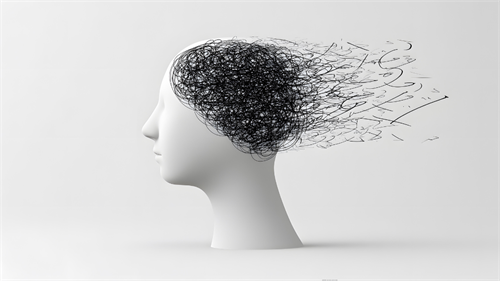
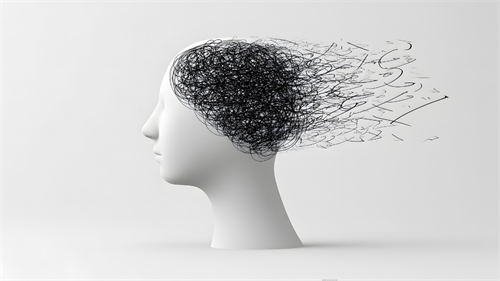
In our daily lives, AI has quietly become a second brain. From calendar reminders and digital note-taking to algorithmic recommendations for shopping, news, and even health decisions, we increasingly rely on machines to remember, analyze, and decide for us. At first glance, outsourcing these cognitive tasks seems like a rational efficiency strategy: free your mind from repetitive chores and let AI handle the heavy lifting. But this convenience comes with hidden cognitive costs, particularly when it fosters automation bias—our tendency to over-trust machine outputs—and potentially diminishes our memory, judgment, and critical thinking over time.
The Cognitive Mechanics of Outsourcing
Human cognition is limited by working memory and attention span. By offloading tasks such as scheduling or note-taking to AI, we can reduce mental load and focus on higher-order thinking. Psychologists have long noted that external memory aids—ranging from pen and paper to digital tools—can improve performance for certain tasks. However, there is a fine line between enhancement and dependency.
Automation bias, a well-documented psychological phenomenon, occurs when humans place undue trust in automated systems. Studies by Mosier and Skitka (1996) and Cummings (2004) reveal that even experienced professionals tend to accept AI recommendations without sufficient scrutiny, especially under time pressure. In essence, outsourcing memory and decision-making can reduce cognitive effort to the point where our brains “exercise” less, much like a muscle atrophying from disuse.
Everyday Examples: When AI Becomes a Crutch
Consider personal digital assistants. An individual may rely on an AI-powered task manager to remember meetings, birthdays, or grocery lists. Over time, the person stops forming mental associations or actively remembering details, relying entirely on reminders. Similarly, algorithmic content recommendations create a feedback loop: AI predicts what we want to see, reducing the need for proactive exploration and critical evaluation of information. As a result, our curiosity and ability to process unfamiliar ideas may diminish.
Take, for example, a student using AI to summarize academic readings. Initially, it saves time, but repeated reliance can erode reading comprehension and critical analysis. Instead of engaging deeply with the text, the student skims the AI-generated summary and assumes understanding. Months later, the same student struggles with problem-solving tasks that require synthesis of information—a direct consequence of cognitive outsourcing.
In professional contexts, the stakes are higher. Healthcare professionals increasingly use AI diagnostic tools; financial analysts rely on predictive algorithms. Automation bias can have serious consequences here. For example, if a physician blindly accepts an AI diagnosis, subtle but critical patient symptoms might be overlooked. In aviation, pilots using advanced autopilot systems have occasionally failed to monitor critical flight parameters because they assumed the system would handle any anomalies. Research by Mosier and Skitka (1996) indicates that such over-reliance on automation can magnify errors rather than mitigate them, even when the AI is generally reliable.
Even in everyday consumer choices, AI can subtly influence judgment. Consider someone who relies on AI-driven nutrition apps to suggest meals or track calorie intake. While convenient, the app may not account for personal health nuances or dietary preferences. Over time, the individual may lose confidence in making independent food choices, leading to over-reliance on machine recommendations for even minor decisions.

The Societal Dimension: Narrowing of Worldviews
The issue extends beyond individual cognition. Recommender systems in social media and search engines shape the information we encounter. By filtering content based on prior behavior, AI can inadvertently reinforce confirmation biases, creating an echo chamber effect. For instance, a person interested in financial investments may primarily receive news about bullish markets and never encounter critical analyses. While this personalization feels convenient, it narrows our worldview and reduces exposure to diverse perspectives, subtly influencing opinions, preferences, and even critical thinking skills over time.
In another scenario, political information curated by AI can subtly shape voter behavior. By prioritizing content aligned with a user’s previous interactions, platforms can reinforce existing beliefs and reduce exposure to counterarguments. Such cognitive outsourcing has broader societal consequences, including polarization and diminished capacity for independent judgment.
Resisting Automation Bias: Practical Strategies
Awareness is the first step. Recognizing the tendency to over-trust AI allows us to introduce deliberate cognitive checks. Several strategies can help:
1. Implement Secondary Verification: Treat AI outputs as suggestions, not directives. Cross-check key recommendations with multiple sources, whether human experts or alternative systems. For example, a financial analyst might compare an AI-driven stock prediction with independent market research before making a trade.
2. Adopt Selective Outsourcing: Delegate repetitive, low-risk tasks to AI, but retain tasks that require nuanced judgment or ethical considerations. A medical practitioner could use AI for imaging analysis but rely on their own clinical judgment for treatment decisions.
3. Engage in Cognitive Exercises: Regularly challenge your memory, problem-solving, and critical thinking skills outside AI-assisted tasks. Techniques can include active recall, mental mapping, or problem-based learning exercises. For instance, students might summarize academic readings themselves before consulting an AI summary to compare insights.
4. Understand Algorithmic Bias: AI systems reflect the data they are trained on. By understanding their limitations, you can make more informed decisions about when to rely on automation and when to intervene. A social media user, for instance, can consciously seek diverse news sources beyond their usual AI-curated feed.
Balancing Convenience and Cognitive Fitness
Outsourcing memory and decisions to AI is not inherently detrimental. Tools amplify human potential, enabling efficiency and focus on complex reasoning. The problem arises when convenience replaces conscious effort. Just as physical exercise is required to maintain muscle strength, cognitive exercise is necessary to sustain memory, judgment, and critical thinking. AI should act as a supplement, not a substitute, for our cognitive capacities.
Moreover, embracing AI thoughtfully can produce positive outcomes. Writers might use AI to draft ideas but still refine arguments independently. Students might leverage AI to check grammar while constructing original essays. The key is intentionality—using AI as a collaborator rather than a crutch.
Conclusion
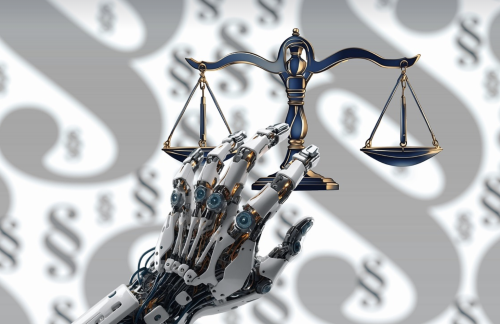
AI can undoubtedly enhance productivity and reduce cognitive load, but blind reliance risks eroding the very faculties that define human intelligence. Automation bias is subtle yet pervasive, influencing how we interact with technology and process information. Resisting this bias requires deliberate strategies, continuous cognitive engagement, and a willingness to question machine outputs. By maintaining this balance, we can harness AI as a powerful ally without sacrificing the mental agility that allows us to adapt, learn, and innovate.
FAQs
1. What is automation bias in simple terms?
Automation bias is the tendency to trust automated systems too much, even when human judgment or additional verification is necessary. People may assume AI outputs are correct because the system appears objective or efficient.
2. Can AI improve critical thinking instead of harming it?
Yes, when used intentionally. AI can support brainstorming, research assistance, and perspective comparison. Critical thinking improves when users actively evaluate, question, and refine AI-generated outputs rather than passively accepting them.
3. Why are recommendation algorithms considered risky?
Recommendation systems often prioritize engagement and personalization. Over time, they may repeatedly expose users to similar viewpoints, reducing exposure to diverse perspectives and reinforcing confirmation bias.
4. Are younger generations more vulnerable to AI dependence?
Younger users who grow up with AI-assisted systems may become highly accustomed to cognitive outsourcing. However, vulnerability depends more on usage habits and digital literacy than age alone.
5. Can professionals safely rely on AI tools?
Yes, but with oversight. In fields such as medicine, aviation, law, and finance, AI should function as a decision-support tool rather than a replacement for expert judgment.
6. How can someone reduce unhealthy dependence on AI?
People can practice selective outsourcing, regularly challenge their memory and reasoning skills, verify important AI outputs independently, and intentionally seek information outside algorithmic recommendations.
References
- Learners’ AI dependence and critical thinking: The psychological mechanism of fatigue and the social buffering role of AI literacy — large empirical study showing AI dependence is linked to lower critical thinking in students and highlights the role of digital literacy (Acta Psychologica, 2025).
- The effects of over‑reliance on AI dialogue systems on students’ cognitive abilities — systematic review finding that over‑reliance on AI dialogue systems can impair decision‑making and critical thinking skills (Springer, 2024).
- Study in Manufacturing & Service Operations Management finds that models like GPT‑3.5/GPT‑4 exhibit many human‑like cognitive biases, emphasizing the need for oversight in decision contexts.
About the Author
Lucien Viremont, PhD – AI Decision Systems & Cognitive Risk Researcher
Lucien Viremont, PhD is a researcher and writer focusing on AI decision-making systems, cognitive bias in algorithmic environments, and the psychological impact of automation on human judgment. He holds a PhD in Cognitive Science from Stanford University, where his research explored how humans calibrate trust in machine-generated recommendations. He has worked with AI ethics labs and decision intelligence startups in the US and Europe. His writing focuses on how AI systems shape — and sometimes distort — human reasoning, autonomy, and responsibility in complex decision environments.
Editorial Transparency Statement
This article was developed through a combination of independent analysis, publicly available academic research, and editorial review. The content aims to provide balanced, research-informed perspectives on artificial intelligence and cognitive behavior. While AI-assisted tools may have been used during drafting or editing, all arguments, interpretations, and final editorial decisions were reviewed and refined by a human editor to ensure clarity, accuracy, and contextual integrity.
The references cited in this article are included to encourage readers to explore the original research and evaluate the evidence independently.
Disclaimer
This article is intended for informational and educational purposes only. It does not constitute medical, psychological, legal, financial, or professional advice. Readers should consult qualified professionals before making decisions related to healthcare, education, investments, or other specialized areas discussed in this content.
The author and publisher make no guarantees regarding the completeness, accuracy, or long-term applicability of the information presented, particularly in rapidly evolving fields such as artificial intelligence and digital technology.
RECOMMEND FO YOU