Google Glass, Segway, and the Pattern Behind Tech That Arrived Too Early
Why Timing—Not Technical Inferiority—Often Decides Their Fate
By Adrian Keller | Updated on February 2026 | 🕓 7 minutes
Key Highlights
- Why do technically impressive products still fail when society is not ready for them?
- Why did the Segway struggle despite strong early endorsements?
- What made the metaverse underdeliver compared to expectations?
- What separates successful ecosystems like the iPhone from isolated hardware innovations?
- How does timing influence whether a technology becomes mainstream or remains niche?
In the history of technology, some failures are more frustrating than others.
They are not crude products.
They are not built on shallow ideas.
In fact, many of them once appeared to represent the future itself.
And yet, years later, they are remembered primarily as cautionary tales.
Google Glass, the Segway, and more recently the metaverse, belong to this category. What unites them is not flawed engineering or lack of ambition, but something more fundamental: they arrived too early—into a world that was not yet ready for them.
When Technology Moves Faster Than Society Can Follow
Google Glass: A Pioneer That Walked Into a Privacy Minefield
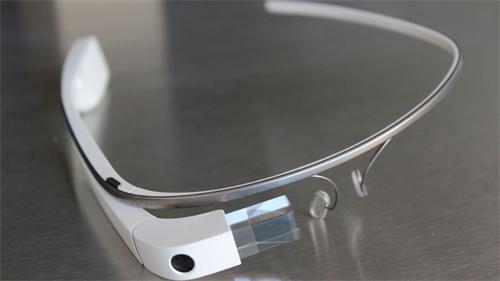
When Google Glass debuted in 2012, it felt like a product pulled straight from science fiction. A head-mounted display that could take photos, record video, provide navigation, and surface information directly in the user’s field of vision—it embodied a bold vision of augmented reality.
Its failure, however, is deeply instructive.
The most obvious problem was privacy.
Google Glass’s always-available camera triggered widespread public anxiety. People feared being recorded without consent in everyday spaces. Restaurants, movie theaters, and bars banned the device outright. Wearers were mocked and stigmatized with the now-infamous nickname “Glasshole.”
The issue was not the camera itself, but the absence of shared social norms around wearable surveillance. Society had not yet negotiated the boundaries of privacy in public spaces. Google Glass crossed that line before the rules existed.
Compounding the problem, the product itself was unfinished. Battery life rarely exceeded an hour. The device ran hot, the display was limited, and yet the price tag was a staggering $1,500. For most consumers, it felt less like a practical tool and more like an expensive technology toy.
Google attempted to reposition Glass as a fashion statement, featuring models and runway shows. This strategy backfired. It alienated core technology enthusiasts while failing to convince mainstream consumers. In the end, Google Glass became a classic example of a hammer desperately searching for a nail—an impressive piece of technology without a clearly defined problem to solve.
A Transportation Revolution Without Roads
The Segway: Brilliant Engineering, Nowhere to Go
If Google Glass failed because of social psychology, the Segway failed because of urban reality.
When the self-balancing Segway was introduced in 2001, expectations were sky-high. Steve Jobs famously praised it, predicting it would transform cities. That transformation never came.
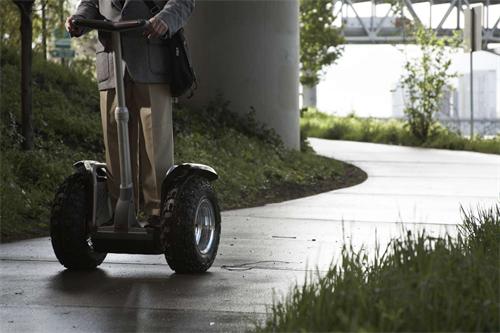
The reason was simple: the Segway had no natural place in existing infrastructure.
At speeds of up to 20 km/h, it was too fast and dangerous for sidewalks. Yet it was too slow and legally ambiguous for roads. Most cities had no regulatory framework or physical space for this new category of personal transport.
At around $3,000 per unit, the Segway was also far too expensive for mass adoption. It quickly became confined to niche uses—airport patrols, tourist tours, corporate campuses—or the status symbol of affluent early adopters.
More importantly, the Segway failed to solve a sufficiently painful problem.
For most urban commuters, a combination of walking, public transportation, bicycles, and later electric scooters already offered a workable balance of cost, convenience, and reliability. The Segway did not meaningfully outperform these options. Instead, it introduced new complications: where do you park it? How do you secure it? What happens when it breaks?
From an engineering perspective, the Segway was elegant. From a societal perspective, it was unnecessary.
The Metaverse: Crushed by Its Own Expectations
The cooling of enthusiasm around the metaverse offers a more recent and vivid example.
Marketed as the “next generation of the internet,” the metaverse promised immersive social interaction, virtual workspaces, and persistent digital identities. In practice, the experience fell far short of the narrative.

True immersion requires bulky headsets. Even premium devices like Apple’s Vision Pro remain expensive, uncomfortable for long sessions, and prone to causing motion sickness. Wearing them for hours at a time is simply unrealistic for most people.
On the application side, the limitations are even clearer. Beyond gaming and experimental social spaces, the metaverse has failed to deliver experiences that are meaningfully better than existing tools. Virtual meetings are often less efficient than video calls. Virtual socializing rarely feels more natural than messaging apps.
When the hype subsided, a harsh reality emerged: for most users, the metaverse does not solve a problem that cannot already be solved more easily elsewhere.
The Structural Gap Between Promise and Reality
Overhyped technologies do not fail merely because of marketing miscalculations. They fall into a deeper structural trap.
To attract investment and attention, founders often compress long-term, uncertain visions into near-term promises of revolutionary change. This creates an inevitable gap between expectation and experience.
The problem is not that products have flaws.
It is that they promise a new continent—and deliver a leaking boat.
Users pay a high upfront cost in money, effort, and cognitive adaptation, only to receive marginal benefits. Unsurprisingly, they return to mature, reliable, and inexpensive alternatives. Technology may sell the future, but users buy based on present experience.
Ecosystems, Not Products, Determine Survival
Breakthrough technologies do not succeed as standalone products. They succeed when they become the core of an ecosystem.
The iPhone and the Flywheel Effect
The iPhone’s success was not solely about hardware innovation. The launch of the App Store was the turning point. By offering low barriers to entry and a clear revenue-sharing model, Apple invited developers worldwide to build on its platform.
Applications solved thousands of concrete problems in work, daily life, and entertainment. Users bought iPhones because of apps; developers built apps because of users. This feedback loop created a powerful ecosystem flywheel.
Finding the “Non-Optional” Use Case
Early smartwatches faced skepticism similar to today’s AR devices: phones already display notifications, so why wear another screen?
The answer emerged when smartwatches anchored themselves to health monitoring—continuous heart rate tracking, ECGs, blood oxygen measurements. These were capabilities phones could not replicate.
The key question is not what technology can do, but what becomes impossible—or meaningfully worse—without it.
Start by Serving One Room, Not the Whole World
For advanced technologies, the most dangerous strategy is attempting to serve everyone from day one.
A wiser approach is strategic narrowing: dominate the environments where the technology’s advantages are undeniable.
In aircraft maintenance, complex surgery, and military command systems, augmented reality can overlay critical information onto physical environments, reducing errors and increasing efficiency. In these contexts, purchasing decisions are driven by return on investment, not emotional comfort. Institutions tolerate expensive, bulky tools if they demonstrably solve problems.
Only after proving value, refining use cases, and reducing costs should such technologies gradually move toward consumer markets.
Cost and Accessibility: The Final Barrier
Price is often the hardest obstacle to overcome.
Early-stage technologies suffer from low production volumes and immature supply chains, keeping prices high and excluding most potential users. Without scale, user feedback remains limited. Without users, developer ecosystems stagnate. Without applications, iteration slows. A vicious cycle takes hold.
For technologies that are ahead of their time, early profitability should not be the goal. Survival should be. Subsidies, rentals, simplified entry-level versions—these are not weaknesses, but strategic necessities.
When Timing Finally Aligns
Ironically, many “failed” technologies eventually succeed—just not in their original form.
A decade after Google Glass, Meta’s collaboration with Ray-Ban achieved modest success by abandoning immature AR displays. Instead, it focused on discreet, practical features like photography and audio, packaged in a familiar design at a lower price. Social acceptance had also shifted.
After its acquisition by Ninebot, Segway pivoted toward smaller, cheaper consumer products and redirected focus to electric scooters and bicycles—markets with clear infrastructure and demand.
Conclusion: Technology Rarely Loses to the Future—It Loses to the Present
Whether a technology survives its premature arrival depends not only on innovation, but on humility.
Successful breakthroughs do not simply announce the future. They solve today’s problems while quietly preparing for tomorrow. They respect human habits, social norms, and economic realities—and invite the rest of the world to build alongside them.
Technologies obsessed with their own superiority, while ignoring lived user experience and ecosystem dynamics, will struggle regardless of when they appear.
In innovation, being early is indistinguishable from being wrong—until the world is finally ready to catch up.
FAQs
1. Does “early failure” mean the technology was not useful?
Not necessarily. Many technologies discussed here were functional, but lacked supporting ecosystems, infrastructure, or social acceptance.
2. Why was Google Glass considered socially unacceptable?
Because it introduced always-on recording in public spaces before privacy norms and regulations adapted to wearable cameras.
3. Was the Segway illegal or just impractical?
It was neither fully legal nor illegal everywhere—it existed in a regulatory grey zone that made widespread adoption difficult.
4. Why is the metaverse still being developed if adoption is weak?
Because foundational technologies (VR/AR, spatial computing) may still evolve into viable use cases over time.
5. What is the biggest factor behind tech failure according to this article?
A mismatch between technological capability and societal readiness, including infrastructure, cost, habits, and trust.
References
1. Christensen, C. M. (1997). The Innovator’s Dilemma. Harvard Business School Press.
2. Wired (Dec 2024). “2025 Will Be Smart Glasses All the Way Down” — Wired
3. Multiple XR Product Launch & Hardware Trend Summaries (2024–2025) — Annual industry trend recap from OFweek, summarizing hardware evolution, price shifts, and ecosystem maturity indicators.
About the Author
Adrian Keller, MSc – Emerging Technologies & Macro Innovation Analyst
Adrian Keller, MSc is an emerging technology analyst specializing in macro innovation trends, biotechnology commercialization, and socio-technical timing dynamics. He holds a Master’s degree in Technology Policy from MIT and has worked with venture studios and research groups analyzing how early-stage technologies fail or succeed based on market readiness rather than technical capability. His writing connects long-term technological shifts with real-world adoption patterns and systemic constraints.
Editorial Transparency Statement
This article is based on publicly available historical cases, industry analysis, and academic research on technology adoption and product-market fit. Interpretations and synthesis reflect editorial analysis rather than reporting of new empirical data. Examples such as Google Glass, Segway, and the metaverse are used illustratively to explore broader structural patterns in technological adoption.
No financial or commercial interests influenced the selection of case studies or viewpoints presented in this article.
Disclaimer
This content is for informational and analytical purposes only. It does not constitute investment advice, product endorsement, or forecasting of specific company outcomes. Technology adoption is influenced by rapidly changing social, economic, and regulatory conditions, and real-world outcomes may differ from the patterns described above.
RECOMMEND FO YOU