Wearable Tech in the Workplace: Productivity Booster or Tool for Surveillance Capitalism?
By Isolde Kavanagh | Updated on February 2026 | 🕓 6 minutes
Key Highlights
- Can wearable devices improve workplace safety without increasing employee surveillance?
- Who owns the biometric and behavioral data collected by workplace wearables?
- Where is the line between productivity optimization and invasive monitoring?
- Can algorithmic performance tracking fairly evaluate human workers?
- How do privacy laws regulate wearable technology in the workplace?
- Should employees have the right to refuse wearable monitoring?
- What safeguards are necessary to prevent abuse of workplace biometric data?
In recent years, wearable technology has quietly entered the workplace, from smartwatches and health trackers to augmented reality glasses and motion sensors, reshaping labor processes and management practices. In many corporate cases, wearable devices are promoted as tools to enhance productivity and safeguard employee health. At the same time, concerns have emerged about their potential use for invasive employee monitoring and behavioral control. Are these devices genuinely “productivity boosters,” or do they function as instruments of surveillance capitalism?
1. Wearable Technology as a Productivity Enhancement Tool
To begin with, it is necessary to understand the practical applications of wearable technology in the workplace and how it relates to productivity improvement.
1.1 Types of Wearable Technology and Functions
Wearable technology encompasses smartwatches, health trackers, augmented reality (AR) glasses, wearable sensors, and even exoskeletons. These devices offer a variety of monitoring and feedback functions:
- Health and physiological monitoring: heart rate, body temperature, sleep quality, and stress levels.
- Behavioral tracking: tracking employees’ location, movement patterns, and task performance.
- Assistive functions: AR glasses provide real-time guidance to technicians, reducing operational errors.
- Safety monitoring: sensors detect hazardous environments and issue alerts.
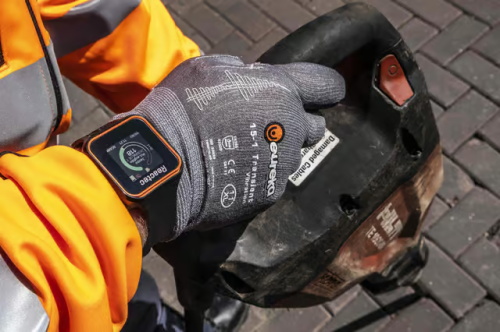
For example, some factories or construction sites deploy exoskeletons to reduce workers’ physical strain and minimize occupational injuries while enhancing efficiency for repetitive tasks. Maintenance personnel equipped with AR glasses can receive real-time operational instructions, increasing task accuracy and speed. These use cases demonstrate the potential of wearable devices to enhance workplace safety, reduce errors, and improve employee physical efficiency.
1.2 Adoption Trends and Impact
Market research shows that the adoption of enterprise wearables is growing, particularly in logistics, healthcare, and manufacturing sectors. Between 2021 and 2024, corporate deployment of wearable devices reportedly reduced workplace injuries by approximately 21% and increased productivity by roughly 28%.
Moreover, in innovation-driven corporate cultures, employees have shown high acceptance of wearable devices for safety monitoring, particularly when accompanied by transparent communication about data usage.
This indicates that when wearable devices are designed to improve safety and assistive functionality, and their data use is transparent, they can provide tangible benefits in productivity, employee well-being, and workplace safety.

2. The Surveillance Capitalism Concern : Technology as a Control Mechanism
However, technology itself is morally neutral. Wearable devices collect highly personalized, continuous physiological and behavioral data, creating fertile ground for surveillance capitalism.
2.1 What Is Surveillance Capitalism?
Surveillance capitalism refers to the extensive collection and commodification of personal data by corporations, transforming individual behaviors into predictive and controllable metrics to drive profit and organizational efficiency. The key issue is how data collection becomes a mechanism for power and capital accumulation.
2.2 How Wearables Can Enable Workplace Surveillance
In the workplace, wearable devices gather data far beyond traditional attendance systems—from physiological states to emotional cues, movement patterns, and social interactions. If this data is used to evaluate performance, predict behaviors, or make managerial decisions, employees’ bodies become part of a performance metric. Examples include:
- Assigning tasks based on heart rate or fatigue indicators.
- Using behavioral data to determine promotions, bonuses, or disciplinary actions.
- Devices that continue collecting data outside working hours.
Media reports have highlighted cases where corporations patented wearable devices to track employee movements, breaks, and efficiency for performance assessment, generating employee anxiety and distrust.
Sociological critiques argue that transforming body and behavioral data into capital value represents a new form of labor control. Unlike traditional supervision, this approach digitizes life trajectories and incorporates them into corporate evaluation systems, consistent with surveillance capitalism’s criticism of autonomy erosion and data-driven control.
2.3 Core Conflicts
Conflict Between Data Collection Scope and Employee Informed Consent
Technological capabilities have long surpassed traditional management boundaries. From location and heart rate to brain waves and emotional states, the data companies can collect is increasingly intimate. The problem is that employees often “consent” under the implicit coercion of “you must use this device to work,” without truly knowing what data is being collected, how it is analyzed, or how it is used. For example, when monitoring truck drivers’ fatigue via EEG headbands, is the data used solely for real-time safety alerts, or will it also be linked to performance evaluations—or even used as a basis for termination? This ambiguity creates a fundamental power imbalance.
Conflict Between Algorithmic Decisions and Human Judgment
The core controversy lies in reducing complex labor value to quantifiable data metrics and automating decisions through algorithms. For instance, Amazon’s system has automatically tracked productivity and generated termination orders. This raises two major issues: first, algorithmic bias may discriminate against certain groups due to flaws in data or models; second, dehumanization—algorithms cannot understand context and strip human managers of the discretion and empathy that should be inherent in decision-making.
Conflict Between Efficiency and Human Dignity
This is the most fundamental clash of values. When technology is entirely driven by “efficiency above all,” workers are alienated from being “ends in themselves” and reduced to mere “tools.” After Jeff Bezos’ space trip, he thanked “every Amazon employee,” while warehouse workers, fearing bathroom breaks would exceed allowed time, refrained from drinking water—a sharp illustration of this conflict. The logic of surveillance capitalism aims to extract data from human experience and optimize it for maximum profit, which runs counter to the human dignity, trust, and autonomy that should exist in the workplace.
3. Legal, Ethical, and Policy Risks
The risks of wearable devices arise not only from their capabilities but also from regulatory gaps and governance mechanisms.
3.1 Privacy and Discrimination Risks
In the United States, the Equal Employment Opportunity Commission (EEOC) warns that using wearable devices to collect health and biometric data may violate anti-discrimination laws if used in hiring, promotion, or termination decisions.
Without clear, transparent policies, companies may inadvertently collect and use sensitive personal information in ways that violate privacy laws, including the EU’s GDPR or U.S. state-level privacy regulations.
3.2 Data Security and Scope Limitations
Wearable devices generate large volumes of data, often stored in cloud services or third-party servers. Data breaches could have severe consequences. Furthermore, without clear boundaries between “work-related” and “non-essential” health data, companies may collect more information than necessary. These risks require mitigation via data minimization, anonymization, clear authorization, and limited retention policies.
3.3 Employee Autonomy and Collective Negotiation
Workplace surveillance should be a subject of collective bargaining. Decisions about whether to use wearable monitoring, how it is deployed, and data retention periods should involve employee representation, not unilateral corporate mandates.
4. Balancing Productivity and Privacy
Effectively managing wearable technology requires a comprehensive governance framework that leverages technology benefits while avoiding surveillance pitfalls.
4.1 Transparent Data Policies
Companies should clarify:
- Purpose and scope of data collection.
- Ownership and access rights of data.
- Data retention and deletion policies.
- Explicit prohibition of discrimination based on health data.
4.2 Employee Consent and Choice
Adoption should be voluntary, with employees able to review and delete personal data. Mandatory monitoring undermines trust and autonomy.
4.3 Data Minimization and Anonymization
Collect only the data necessary to achieve safety and efficiency goals, and anonymize information to protect individual privacy.
4.4 Oversight and Accountability
Establish internal oversight committees with employee representation to review wearable technology use and ensure it aligns with stated objectives.

Conclusion: Avoiding Both Technological Utopianism and Dystopian Fear
Wearable technology in the workplace is neither inherently a “productivity booster” nor automatically an “instrument of surveillance capitalism.” Its impact depends on institutional design, rules of use, power structures, and ethical choices.
When companies are transparent, respect privacy, uphold employee autonomy, and focus on safety and assistive functions, wearable devices can enhance efficiency, safety, and workplace well-being. Conversely, in environments of power imbalance and weak oversight, these technologies can become tools for pervasive monitoring, exacerbating employee marginalization.
What is required is neither uncritical embrace nor fear-mongering, but critical evaluation, regulatory intervention, legal safeguards, and ethical governance, ensuring that technology empowers humanity rather than constrains it.
FAQs
1. What industries use workplace wearable technology the most?
Wearable devices are most commonly used in logistics, manufacturing, healthcare, warehousing, transportation, and construction. These industries often adopt wearables for safety monitoring, ergonomic support, and operational efficiency.
2. Can employers legally monitor employees outside working hours?
This depends on local laws and employment agreements. In many jurisdictions, continuous monitoring beyond work hours may raise serious privacy and labor law concerns, especially if employees are not fully informed or cannot opt out.
3. Do wearable devices improve workplace safety?
Research suggests they can reduce workplace injuries, fatigue-related accidents, and repetitive strain when used appropriately. For example, wearable sensors can detect unsafe environmental conditions or physical overexertion in real time.
4. What are the biggest privacy risks associated with workplace wearables?
Major risks include unauthorized sharing of biometric data, excessive monitoring, lack of informed consent, algorithmic profiling, and unclear data retention practices. Health and emotional data are particularly sensitive.
5. Can wearable data be used in hiring or firing decisions?
In some cases, companies have explored integrating wearable data into performance evaluations. However, regulators such as the Equal Employment Opportunity Commission have warned that improper use of biometric or health data may violate anti-discrimination laws.
6. What is the difference between safety monitoring and surveillance?
Safety monitoring focuses on preventing harm and improving workplace conditions, while surveillance becomes problematic when data collection expands into behavioral prediction, productivity scoring, or continuous monitoring unrelated to safety needs.
References
1. Gidaris, C. (2025). Surveillance capitalism, datafication, and unwaged labour: The rise of wearable fitness devices and interactive life insurance. Surveillance & Society.
2. Government Accountability Office. (2024). Science & technology spotlight: Wearable technologies in the workplace (Report No. GAO‑24‑107303). U.S. Government Accountability Office.
3. Massaro, S., et al. (2025). Wearable Devices Methodology: Opportunities and Challenges in Human Resource Management. Human Resource Management Journal.
4. Wearable sensors in industrial ergonomics: Enhancing safety and productivity in Industry 4.0. (2025). Sensors, 25 (5), 1526. doi:10.3390/s25051526
5. EEOC says wearable devices could lead to workplace discrimination. (2024, December 19). Reuters.
About the Author
Isolde Kavanagh, PhD – Digital Risk, Security & Algorithmic Governance Researcher
Isolde Kavanagh, PhD is a researcher specializing in digital risk systems, cybersecurity governance, and algorithmic public infrastructure. She holds a PhD in Information Systems from the University of Cambridge and has worked with policy institutions and cybersecurity firms across Europe. Her work focuses on how automation redistributes risk, how digital surveillance systems evolve in workplaces, and how algorithmic governance reshapes public decision-making and civil infrastructure.
Editorial Transparency Statement
This article is intended for informational and educational purposes only. It is based on publicly available academic research, policy reports, industry publications, and reputable news sources available at the time of writing. The content aims to present a balanced analysis of workplace wearable technologies by examining both operational benefits and ethical concerns.
The author and publisher do not receive compensation from wearable technology manufacturers, data analytics firms, or enterprise monitoring providers mentioned or referenced in this article. No sponsored content or paid influence was involved in the preparation of this analysis.
Disclaimer
The information provided in this article does not constitute legal, medical, employment, cybersecurity, or financial advice. Laws and regulations regarding workplace monitoring, biometric data collection, employee privacy, and wearable technology vary across jurisdictions and industries and may change over time.
Readers should consult qualified legal, compliance, human resources, or data protection professionals before making decisions related to workplace wearable technology policies or implementation. The publisher assumes no responsibility for actions taken based on the information contained in this article.
RECOMMEND FO YOU