AI Didn’t Kill Programming — But It Changed Who Should Learn It

By Kael Rosenberg | Updated on April 2026 | 🕓 7 min read
Key Highlights
- If AI can already generate code, what should humans still learn?
- Why is judgment becoming more valuable than syntax memorization?
- What skills separate real software creators from AI-dependent users?
- How does AI change the role of engineers, founders, and non-technical professionals?
- Can AI-assisted coding actually reduce productivity in some cases?
- What does “system-level thinking” mean in the age of generative AI?
For more than a decade, “learning to code” has been presented as a near-guaranteed ticket to a better career and a more secure future. Educational systems, vocational programs, and popular career advice around the world have all repeated the same message: master programming, and you will master the future.
For a long time, this narrative was not wrong.
Over the past thirty years of computing, the core value of programming lay in production. To know how to code meant you could translate abstract logic into machine instructions and create deterministic, functioning software. If you could not write the code, the product simply did not exist. “Can write” meant “can build.” Skill and output were connected by a direct, linear causal chain.
However, this once-effective but overly simplistic skill narrative is now becoming dangerous. Under the capability restructuring triggered by generative AI, it is creating large-scale and systemic misallocation of effort and illusions of competence, posing real risks to both individual career paths and broader social development.
When AI systems can fluently complete code, explain errors, scaffold projects, and even generate full applications, the long-standing “programming ticket” begins to crack. The question is no longer whether AI can write code—it clearly can—but something more fundamental:
If machines can increasingly perform syntactic and pattern-based tasks, what is the real purpose of humans learning programming?
The failure of the old logic does not mean that programming itself has lost value. Rather, the problem is that its return on investment as a form of universal human capital is undergoing a silent but severe divergence.
The belief that “everyone should learn to code” rested on two implicit assumptions.
First, that coding ability was scarce and could be directly converted into market premiums.
Second, that humans were the most efficient and reliable executors of coding tasks.
Generative AI—especially tools like GitHub Copilot—directly undermines the second assumption and indirectly erodes the first. For a large class of entry-level programming tasks aimed at applying known patterns to known problems, AI has already become a faster, cheaper, and more consistent executor. As a result, the marginal returns of spending massive amounts of time memorizing syntax and debugging trivial errors are rapidly declining.
The traditional “learn → practice → monetize” pathway now encounters powerful automation competition at its very starting point.
But this observation only scratches the surface.
Giving everyone a high-resolution smartphone does not make everyone a photographer. What the phone lowers is the barrier to pressing the shutter, not the barrier to creating meaningful images.
Similarly, when the surface-level “coding labor” is automated, the value of programming does not disappear—it moves. And it moves in a fundamental way.
Programming today is becoming less about how to implement and more about what to implement and why. The human role is shifting from a craftsman executing deterministic instructions to an architect navigating uncertainty. AI takes over the deterministic components—syntax, templates, common implementation patterns—while leaving humans with the truly difficult parts: ambiguous requirements, conflicting constraints, complex trade-offs, and ethical responsibility for outcomes.
The value of programming work is rapidly concentrating around evaluation, judgment, and decision-making. Is this logic correct? Is it secure? What are the performance implications? Are there overlooked edge cases? When AI offers three possible implementations, can you quickly determine which one best fits the current system architecture and future evolution?
In this new landscape, judgment has become far more valuable than execution.
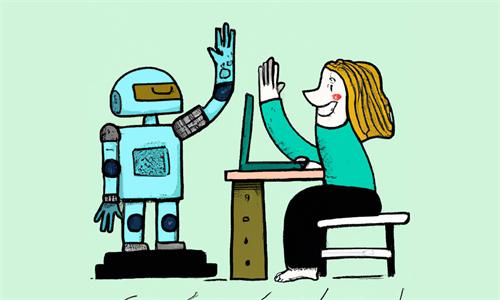
AI can effortlessly generate high-quality “bricks” in the form of functions or modules. But designing the blueprint of an entire city—the system architecture—has become more critical than ever. This requires deep systems thinking: how modules are divided, how interfaces are designed, how data flows, where complexity accumulates, and where bottlenecks will emerge.
Without this top-level design capability, AI remains merely a highly efficient bricklayer, while the human operator has no clear idea of what kind of structure should be built in the first place.
At the same time, another barrier is becoming visible. In the past, a problem like “how to sort data” had a single concrete answer in the form of an algorithm. Today, that answer can be generated instantly. The real bottleneck has shifted to whether one can ask precise, complete, and actionable questions.
A vague request such as “build a website” produces chaotic and low-value code. A well-defined problem—specifying functionality, technology stack, performance targets, and security constraints—can drive AI to generate genuinely useful outputs. The ability to define problems clearly has become the highest-leverage meta-skill in modern programming.
This shift fundamentally alters what learning programming should mean.
The old focus emphasized syntactic correctness and pattern memorization—remembering library functions and mastering multiple ways to implement standard algorithms.
The new focus should prioritize problem decomposition and precise specification: how to break complex goals into a sequence of well-defined steps that AI or computers can execute collaboratively. This skill matters far more than manually writing every line of code.
With AI, one no longer needs to endure long coding and debugging cycles to test whether a technical idea is viable. Through rapid interaction and prototyping, AI can immediately expose the implications of architectural choices, data flows, and performance constraints. Decisions that once required months of implementation to validate can now be assessed at the earliest stages, before sunk costs accumulate.
As a result, what determines a person’s technical value today is no longer whether they can write code, but whether they truly understand:
Do you understand the essence of the problem you are solving?
Do you understand the technical, ethical, and commercial constraints surrounding the solution?
Do you understand what the AI-generated code means for the entire lifecycle of the system?
AI lowers the barrier to appearing competent at programming, but it does not lower the barrier to creating real value through programming.
For students pursuing technical careers, AI should not be a reason to retreat—but it demands an immediate shift in learning priorities. From day one, AI tools should be treated as learning partners. Students should practice giving precise instructions and critically reviewing AI-generated code. The goal is no longer to become “the best Java programmer,” but to become someone capable of solving complex technical problems using all available tools—including AI—at a system level.
For product managers, founders, and business leaders, the return on learning programming has paradoxically increased. The goal is not hands-on implementation, but gaining enough computational thinking within a short period to communicate efficiently with engineers and AI systems. This capability may represent one of the highest-leverage investments of an entire career.
For professionals in other fields, the optimal strategy becomes “learn when needed, learn to solve problems.” Tools like ChatGPT can serve as real-time tutors and code generators, allowing learning to be directly driven by tasks such as “analyze my experimental data using Python.” In this process, code is not the destination—it is a disposable intermediate artifact.
Artificial intelligence has not eliminated programming. What it has eliminated is an outdated definition of programming and a value system centered on surface-level proficiency. It amplifies true creators while rapidly eroding the value of middle layers that rely solely on “being able to write code.”

Competition is being rewritten in stark terms.
It is no longer about whether you can build something.
It is about whether you can consistently make the right decisions—and ensure that the entire world, including AI, executes them efficiently and reliably.
FAQs
1. Does AI mean programming jobs will disappear?
Not entirely. AI is more likely to automate repetitive and pattern-based coding tasks rather than eliminate software development itself. The demand is shifting toward architecture design, systems thinking, security evaluation, infrastructure integration, and decision-making under uncertainty.
2. What programming skills are becoming less valuable?
Tasks centered on syntax memorization, boilerplate implementation, repetitive debugging, and standard CRUD-style development are becoming easier to automate with AI coding assistants.
3. What skills are becoming more important because of AI?
High-value skills now include:
- System architecture
- Technical decision-making
- Security and reliability evaluation
- Problem specification
- AI prompt precision
- Cross-functional communication
- Understanding business and ethical constraints
4. Will software engineering become easier for non-technical people?
In many ways, yes. AI lowers the barrier to prototyping, automation, and experimentation. However, turning prototypes into reliable, scalable, and secure systems still requires deep technical understanding.
5. Is prompt engineering replacing programming?
Not exactly. Prompting is becoming part of programming rather than a replacement for it. Clear problem definition and precise instructions are increasingly important, but technical judgment remains essential.
References
- Feiyang, X., Medappa, P. K., Tunc, M. M., Vroegindeweij, M., & Fransoo, J. C. (2025). AI-assisted programming may decrease the productivity of experienced developers by increasing maintenance burden. arXiv.
- Song, F., Agarwal, A., & Wen, W. (2024). The impact of generative AI on collaborative open-source software development: Evidence from GitHub Copilot. arXiv.
- Neffke, F., et al. (2026). AI-assisted coding reaches 29% of new US software code. Science (study summary).
- Medium (Checha, V.). (2025). AI Coding Assistants: The gap between marketing hype and developer reality.
About the Author
Kael Rosenberg, MBA – Work Systems, Digital Economy & Creative Labor Analyst
Kael Rosenberg, MBA is a technology and labor market analyst focusing on how AI reshapes work, productivity systems, and creative economies. He holds an MBA from London Business School and has worked as a consultant for digital transformation projects in Fortune 500 companies. His research explores how AI changes labor leverage, creative ownership, skill hierarchies, and the evolving definition of “knowledge work” in the automation era.
Editorial Transparency Statement
This article is independently written for educational and analytical purposes. The content is based on publicly available research papers, industry reports, technical observations, and long-term trends in software development and artificial intelligence.
The article does not receive sponsorship from AI model providers, coding assistant vendors, or software companies mentioned directly or indirectly in the discussion.
Some cited research papers are preprints or early-stage academic publications that may not yet have completed formal peer review.
Disclaimer
This article is intended for informational and educational purposes only and should not be interpreted as career, financial, legal, or investment advice. Technology markets, hiring conditions, and AI capabilities evolve rapidly, and individual career outcomes depend on personal skills, experience, geographic location, and industry conditions.
Readers should independently evaluate educational and professional decisions based on their own circumstances and consult qualified professionals when appropriate.
RECOMMEND FO YOU